
By Elaine Langer
Temple Beth El
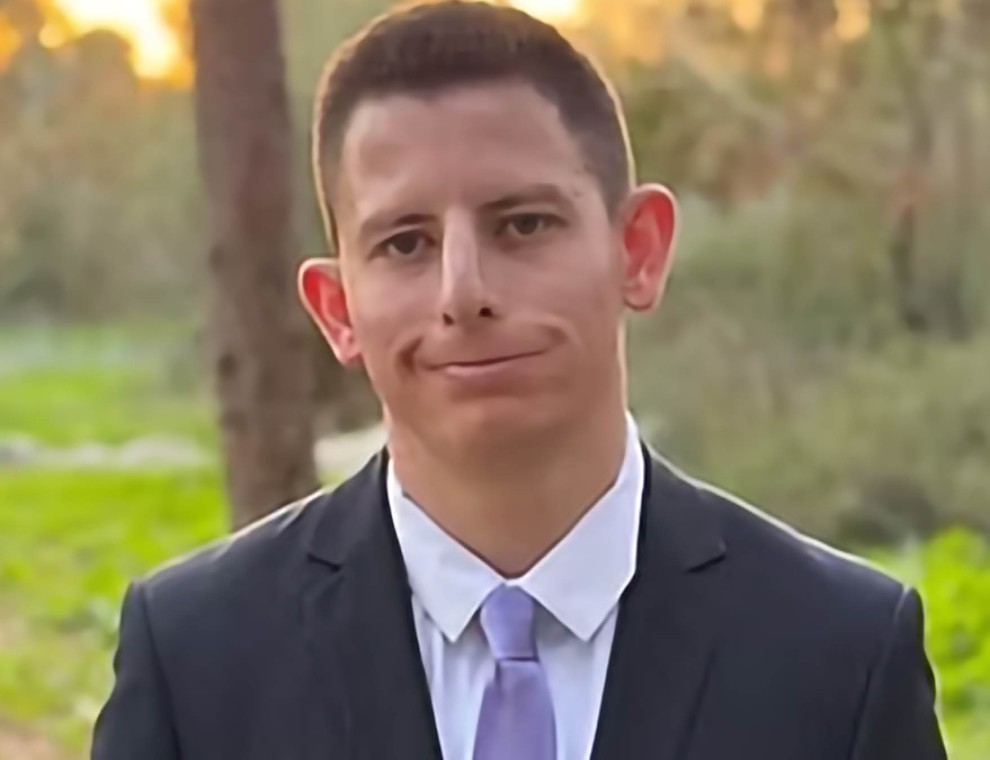
Ira Kohler, a former Israel Defense Forces paratrooper, told stories from his post-October 7, 2023, combat experiences at Temple Beth El on September 5. In a discussion facilitated by Rabbis Shoshanah Tornberg of Congregation Keneseth Israel and Michael Singer of Congregation Brith Sholom, the Long Island native talked with the community audience about his memoir “Once a Paratrooper: The Story of a Lone Soldier in the Gaza War” and his personal experiences in action.
The opening question for the evening was, “Why did you want to enlist in the IDF?” He answered that he was brought up in a strong Jewish community in Plainview, Long Island. He attended a Solomon Schechter Day School through eighth grade, was involved in the USY youth movement, and lived in what could be described as a Jewish bubble, all of which contributed to establishing a bond between his Judaism and Israel.
The Neutra family of Plainview, very close friends of his own family, were also a strong influence. Omer Neutra, an IDF lone soldier who was murdered on October 7 and whose body was held captive in Gaza for about two years, was one of Kohler’s closest friends.
When Kohler entered the University of Delaware, it was the first time he experienced life outside his Jewish bubble. During his freshman year, he felt compelled to serve in the IDF, but his parents convinced him to finish college before enlisting. So he wrapped up his studies in three years and joined the IDF right after graduation.
Kohler told the audience how demanding his IDF training was, but emphasized that nothing compares to actual combat. He described the October 7 fighting as “primitive” and “fierce.” He said that he had time to mentally prepare to go into Gaza but no time to think on October 7. He said October 7 was planned to be the beginning of an IDF “war test,” so his battalion was ready, but not near Gaza. The helicopter that was transporting him to the strip was shot at as it approached but was able to land. As the IDF soldiers left the helicopter, they engaged in a fierce gun battle with Hamas terrorists. The helicopter was hit again and exploded, but fortunately, all the IDF soldiers had gotten out.
When you’re at war, he said, situations like that become “normal”—i.e., seeing dead bodies or having to kill someone who’s coming to kill you. He emphasized that the soldiers’ priority, first and foremost, is to protect Israel and all its citizens. They carried Israeli flags on which they wrote the names of their fallen comrades. He said that the fight to bring Omer Neutra’s body home was a very difficult one, and he remained in the IDF reserve because he felt that he couldn’t leave Israel until “Omer was home.” He left when his unit was transferred from Gaza to another part of the country.
Kohler told the audience that life after the army was much harder than fighting in the war. He explained that soldiers need a lot of support when they return home, psychiatric as well as medical. That support is more available in Israel than it is in the United States, and there’s less stigma to getting psychological help there. He said that he has back trouble and others and jokes that he feels like an 80-year-old man when he engages in athletic activities. Still, he feels “lucky” to have been able to serve and that his army service was so “meaningful.”
After Kohler finished, those gathered participated in a community Selichot service led by all the Lehigh Valley clergy.