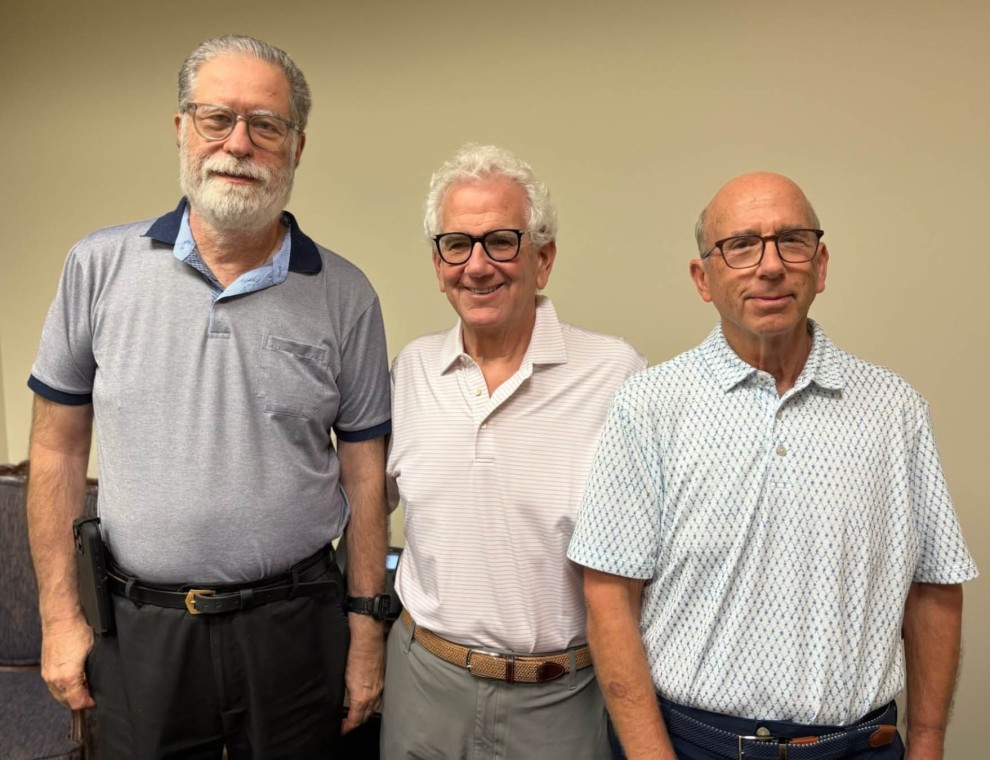
Like most members of the Lehigh Valley Jewish community, the three trustees of the Charles and Figa Kline Foundation didn’t personally know the institution’s husband-and-wife founders.
“None of us ever met Charles and Figa Kline,” said trustee Barnet Fraenkel. “My father was on this board, and he knew them, but our generation? None of us knew them. We were little kids when they died.”
Despite that the threads of connection have frayed a bit over the decades, most community members who did not know the Klines do regularly enjoy the benefits they left to the community. The first clue is the name on the main venue for Jewish community events in the Lehigh Valley: the JCC’s Charles and Figa Kline Auditorium.
The JCC gave the Kline Auditorium its name because the Klines provided so much support for the construction of its current building in the 1950s. “The JCC was a priority of the Klines,” said Fraenkel.
The Charles and Figa Kline Foundation came later, and doesn’t usually get the kind of attention the auditorium does. That’s generally OK with the trustees, as the act of giving is its own reward. “According to the Talmud,” trustee Roberto Fischmann said, “it’s the giver who is benefitting the most.”
“One of the things Barnet’s father always said was, ‘We were never looking for fanfare,’” said trustee Stewart Furmansky. “We were there to help take care of the community.”
That doesn’t mean the community shouldn’t know where its help is coming from. “The other extreme is,” Furmansky explained, “we shouldn’t be forgotten exactly, either.”
Since the days of the JCC construction, the foundation the Klines set up to keep the Lehigh Valley Jewish community thriving into the future has funded everything from the synagogues and Jewish Family Service to summer camp scholarships and the Jewish Day School and everything Jewish in between.
The money came mostly from real estate. Charles, who at one time lived in the grand Americus Hotel in downtown Allentown, was an investor with holdings in various locations. Since he and Figa didn’t have children, when they died, the Jewish community was their major beneficiary, particularly through their foundation and its annual allotments over the years.
One of the more recent allotments has been for camp scholarships. For many kids, camp may be the one time of year that Jewish life doesn’t just make an occasional appearance, but instead is an everyday immersive experience. “We funded it and asked the Federation to facilitate, to figure out who needs a scholarship,” Furmansky said.
Every October, the trustees figure out the coming year’s allotments. Their process has come a long way from the old days, when synagogues and agencies would simply come to them when they had a pressing financial need. “There was a time that we would get a phone call to say, ‘Look, we don't have enough money to pay our staff,’” Furmansky said.
Things were just more casual then. “It seemed the community was smaller,” he continued. “Everybody knew everybody.”
Of course there were also large projects that required financing, complex and costly undertakings like building renovations. “Any Jewish institution that had any kind of capital campaign or expansion has gotten some kind of donation from the foundation,” Fischmann said.
These days, hopeful recipients have to make requests in advance for annual funding. By encouraging more detailed tracking of spending and more methodical and realistic planning, it works out better for all parties involved, foundation and funding recipients alike. “It’s proven to be a good thing for the organizations, so they know where their money’s going,” Fischmann said.
The foundation, meanwhile, has always known where its money was going: wherever it can make a positive impact on Jewish life in this community. “There’s no Jewish organization in the Allentown area that doesn’t get money from us,” Furmansky said.